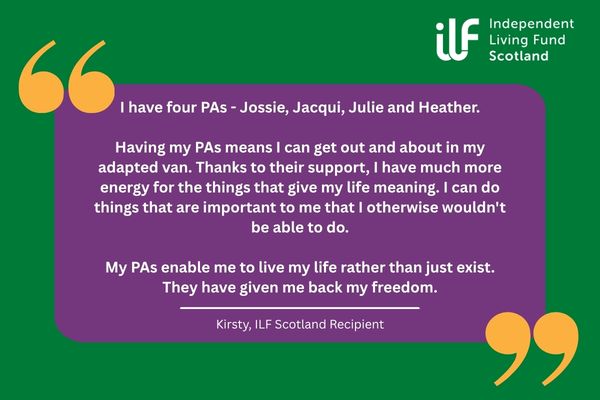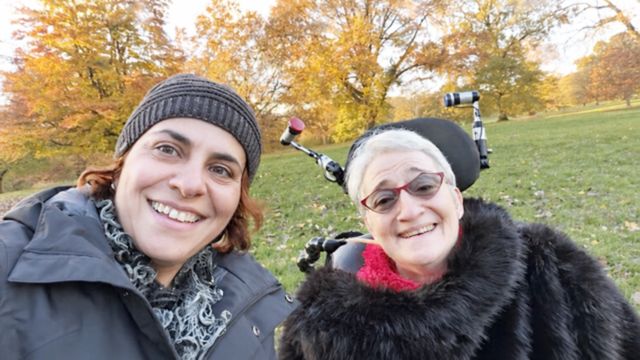
To mark National Personal Assistants Day on Friday 13 November, Jossie shares her experience of supporting her friend Kirsty as a Personal Assistant (PA). From helping with everyday tasks to providing practical and emotional support, Jossie explains what the role means to her and the difference it has made to Kirsty’s life.
How long have you been Kirsty’s PA?
I have known Kirsty for over half my life, and she is one of my closest friends. Over the past year I became increasingly aware of how much she was struggling with everyday tasks. She also still had boxes unpacked from her move back from Spain, which she was unable to sort through independently.
When Kirsty received ILF funding, she realised she could offer me a few hours of paid work each week to provide more regular support. As a long-standing and trusted friend, she felt comfortable asking me to help.
I have been working as her PA since June. Before this I helped whenever I could, but it was often quite haphazard because of needing to work during the week. Thanks to ILF funding I'm now able to offer Kirsty consistent, reliable support, which has made a real difference.
Why did you decide to become a PA?
I wanted to make a positive difference to Kirsty’s everyday life by helping her regain some control over the things she was finding difficult. Being her PA gives me the opportunity to offer practical support while encouraging her independence and helping her enjoy a better quality of life. It is rewarding to know that even a few hours a week can make a meaningful difference.
What does your role involve?
My role is quite varied and involves supporting Kirsty with both practical everyday tasks and more personal matters. This includes managing paperwork, financial and welfare matters, shopping, preparing nutritious meals and helping her organise her home. I also support her with appointments and getting out and about when possible.
A big part of my role is helping Kirsty stay on top of things that might otherwise become overwhelming, while encouraging her independence and ensuring she remains involved in decisions about her own life.
What is your favourite part about being a PA?
My favourite part is simply spending time with Kirsty. We've been friends for so many years, so I genuinely enjoy her company, our conversations and having a laugh together.
I also find it rewarding to help ease some of the worries and pressures she faces, particularly when it comes to making big decisions. For example, we recently attended a Pension Wise appointment where we had to discuss some difficult realities around her life expectancy and future financial planning. It wasn't an easy conversation, but it was an important and necessary one.
Being able to support Kirsty through moments like these, as well as enjoying the lighter, everyday moments together, makes the role particularly meaningful to me.
What would you say to someone thinking about becoming a PA?
I'd say give it a go! You don't necessarily need lots of experience, but you do need patience, kindness, reliability and a good sense of humour. It is a really rewarding role where you can make a genuine difference to someone's quality of life. It is also much more varied than people might imagine, and you can build a really meaningful working relationship.